
The Hard‑Learned Lessons That Built Culinary Coachworks
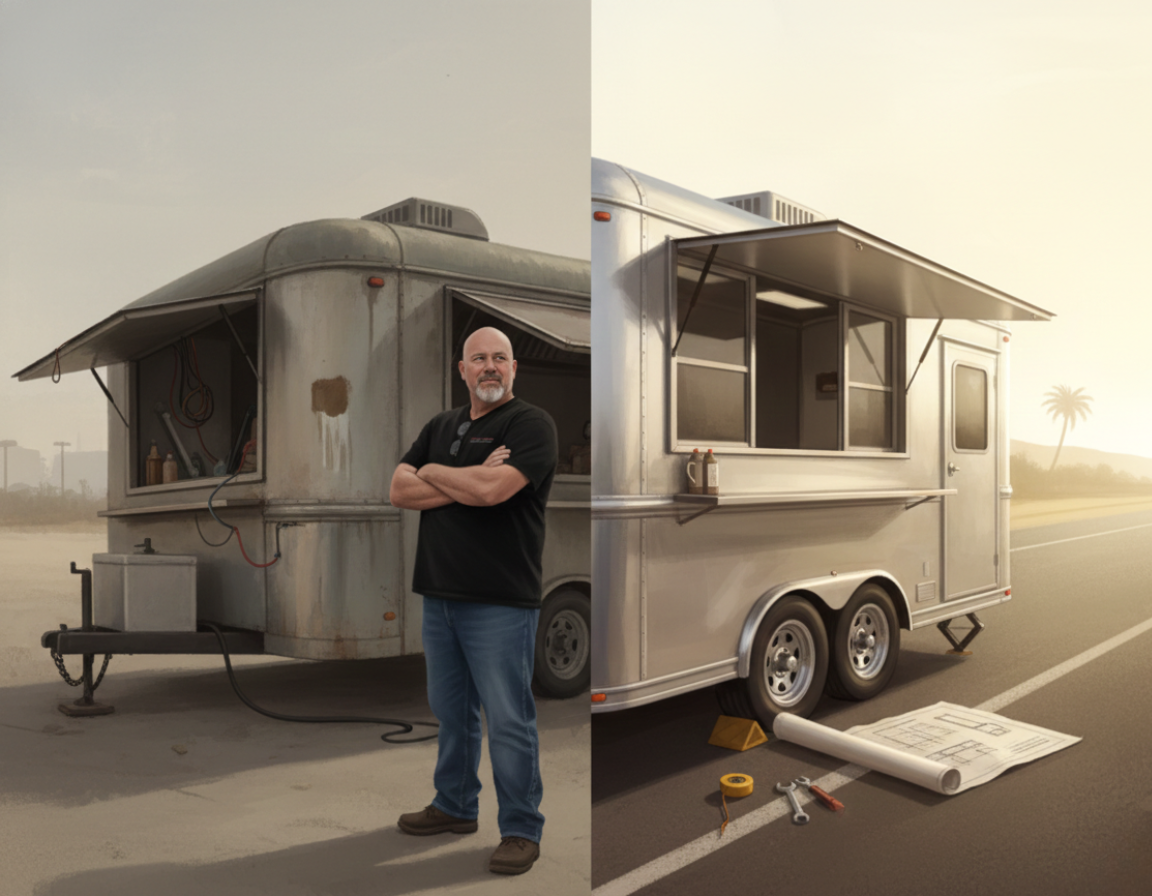
Ever buy a “ready‑made” tool online only to discover it’s a piece of junk? That’s how my journey began. Picture me: a 200+ pound bald guy from Los Angeles trying to be a sushi chef. I bought a food trailer sight unseen from across the country and drove 3,000 miles to pick it up. By the time I got home, I had spent thousands on a rig that wasn’t legal in California and barely functioned. I was defeated—but also determined. This is the story of how my disaster turned into Culinary Coachworks and why I’m obsessed with building trailers that work for real people.
The $5,000 Lesson
Many years ago, a friend convinced me to sell pizza at a community college. I found a 14‑foot trailer on eBay for $5,000+, not realizing it was in Charleston, North Carolina. Instead of walking away and losing my $500 deposit, I drove across the country. After fuel, hotels and outfitting the trailer with a pizza warmer, I had spent over $15,000. On day one, I sold a whopping $32 of pizza. Turns out the trailer wasn’t approved for any California health department. It leaked, the wiring was a mess and the layout was a nightmare. I felt like I had been sold a hammer with no handle.
Turning Failure into Purpose
That miserable experience taught me three things:
Do your homework. Don’t buy equipment from out of state without verifying it meets California codes. Los Angeles guidelines require equipment certified by an ANSI‑accredited program and plan checks. I learned that cheap isn’t cheap when it doesn’t meet standards.
Plan and budget realistically. I severely underestimated costs and time. Many new operators do the same. Today I advise clients to over‑budget and to expect a 3–5 month timeline for custom builds.
Build with the user in mind. My old trailer’s layout made me run laps. Now, I focus on ergonomic design, durable materials and compliance with fire‑suppression and ventilation rules so other operators don’t suffer like I did.
Our Values Today
Those early mistakes shaped everything we do at Culinary Coachworks:
User‑first design. We discuss our clients’ businesses, understand their menus and build kitchens that support their workflow. We set serving windows at a height where customers see the action and crew members don’t strain.
Transparency. We speak openly about costs, timelines and potential hurdles. There’s no hidden fees or surprise delays because we want clients to succeed long term.
Compliance as a foundation. We stay up to date on state and county requirements so our builds are inspection‑ready. California now requires mechanical ventilation and automatic fire‑suppression for mobile kitchens we incorporate these from the start.
Support beyond delivery. We help with discussing commissary contracts, plan check submissions and training because success doesn’t end when the trailer leaves our lot.
FAQs
-
After buying a non‑compliant trailer and losing money, Frank vowed to build better mobile kitchens so others wouldn’t repeat his mistake.
-
User‑first design, transparency about costs and timelines, compliance with health codes and long‑term support.
-
We consult county health departments, attend Mobile Round‑Up events and integrate new requirements like fire suppression systems into all builds.
My worst investment became the foundation of a company dedicated to doing things right. Every trailer we build carries the lessons from my early mistakes, along with a promise to support you through the process. If you’re looking for a partner who’s been in the trenches and has the scars to prove it, Reach Out to Frank or Explore our Custom Builds. Let’s create your success story together. Also, check out our rentals for a faster way to enter the mobile kitchen market.