
Food Trailer Build Timeline – How Long to Rent or Build
How Long Does It Take to Rent or Build a Food Trailer?
You’ve got a killer menu idea and a name picked out—now you’re itching to serve. But how long will it take to get from idea to open window? Spoiler alert: it’s longer than you think. Whether you’re renting a trailer or building from scratch, several steps—applications, plan reviews, commissary contracts and inspections—take time. Let’s break down a realistic timeline so you can plan your debut instead of sitting on the sidelines.
Renting a Trailer: Faster but Not Instant
Renting is usually quicker because the physical trailer already exists. However, you can’t skip permits and plan checks. Here’s a rough timeline:
Application and deposit: You can secure a rental within a week if the trailer is available. Make sure you have your deposit and first month’s rent ready.
Business license and mobile food facility permit: Counties require you to apply for these before you operate. Allow two weeks for paperwork and approval.
Food handler certifications: Every employee needs a food handler card within 30 days. Schedule training before your launch.
Commissary contract: California requires you to store and service your trailer at a commissary. Finding a commissary and signing a contract can take one to two weeks.
Inspection and permit: Schedule your inspection as soon as your commissary and permit paperwork are in order. Fresno County, for example, conducts a Mobile Round‑Up and sets a deadline of March 31 for renewals. Plan for inspections two to four weeks after submitting your application.
Altogether, renting a trailer can take 4–6 weeks if you’re organized. Don’t forget to budget time for branding and marketing so customers know where to find you.
Building a Trailer: Patience Pays Off
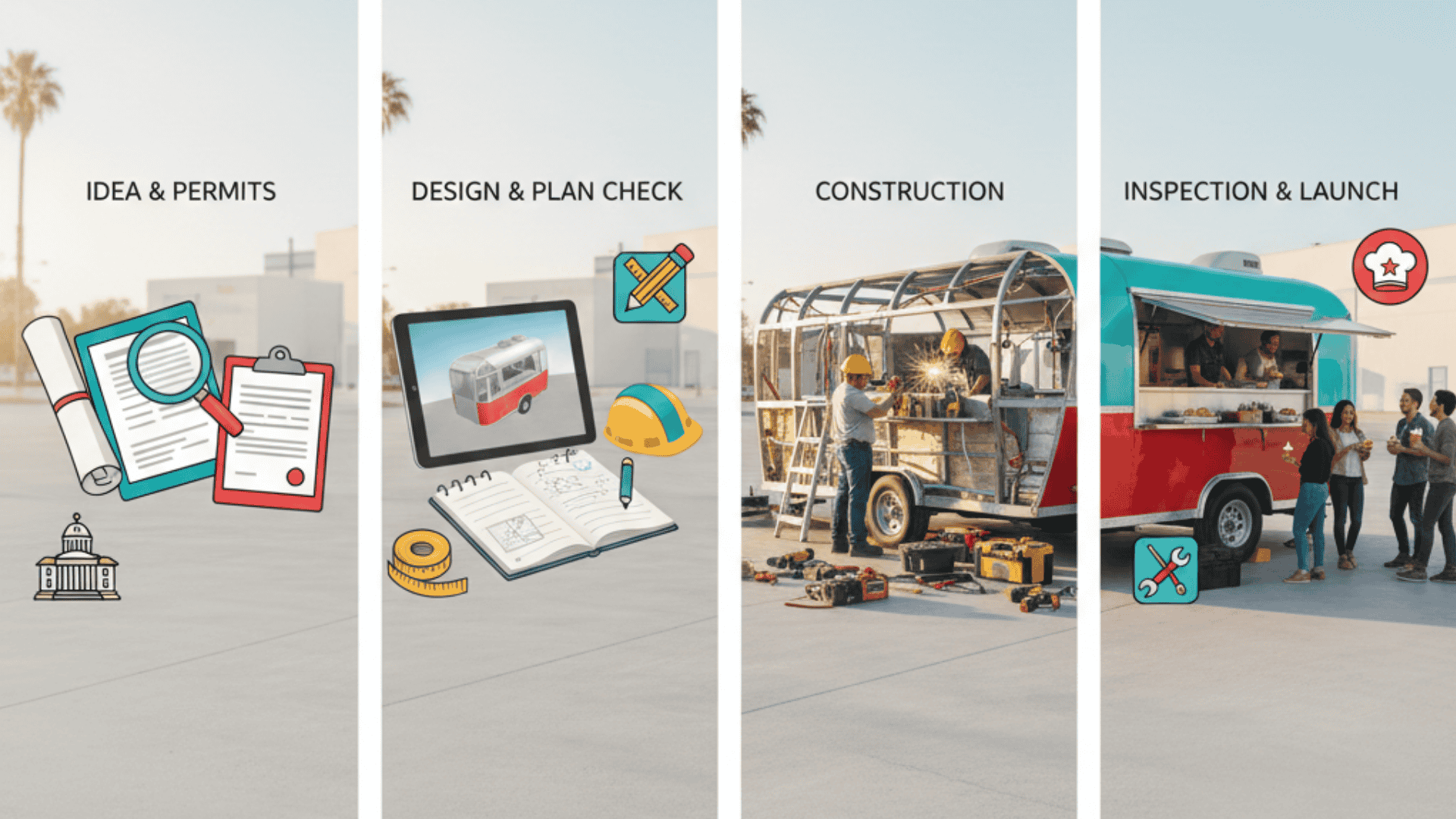
Building is a longer process because you need to design, construct and inspect the trailer. Here’s a realistic timeline:
Design and quote (2–4 weeks): We work with you to plan the layout, choose equipment and produce a quote. It’s like drawing up blueprints for a house.
Plan check (20 business days): Counties like Fresno require plan approval before construction, which takes about 20 business days. Meanwhile, you should gather your business license documents.
Construction (8–12 weeks): Building from the ground up takes time. We source materials, install equipment, electrical and plumbing and meet code requirements, including fire suppression systems.
Commissary contract and training (1–2 weeks): Secure a commissary and learn how to operate and clean your equipment.
Inspections and final permit (2–4 weeks): Schedule a county inspection. Inspectors check everything from temperature controls to proper storage. Once you pass, you’ll receive your mobile food facility permit.
Overall, building a food trailer can take 3–5 months. It’s longer than renting, but you end up with a custom kitchen that matches your workflow and brand.
FAQs
-
Not really. Most counties have mandated review periods—Fresno’s initial review takes 20 business days. Prepare your documents early to avoid delays.
-
Yes. All mobile food units must operate from a commissary. Start looking for one while your trailer is under construction.
-
You risk paying penalties or losing your permit. For example, Fresno County imposes fines for missing their Mobile Round‑Up. Don’t wait until the last minute to schedule inspections.
Timing is everything when launching your food trailer. Renting can get you on the road in about a month, while building takes several months but yields a custom kitchen. Whichever route you choose, plan ahead and stay in close communication with your county health department. Ready to map out your timeline? See our Food Trailer Build Cost Guide or Schedule a Consultation so we can help you pick the right path. Explore our Custom Builds and let’s turn your dream into a workable kitchen or check out our rentals for a faster way to enter the mobile kitchen market.